21 June 2026
Best Time to Visit Chikmagalur: Month by Month Guide
A month by month look at the best time to visit Chikmagalur, covering weather, monsoon greenery, coffee season and the quietest weeks to travel.
Chikmagalur has a season for every kind of traveller. The hills are green for most of the year, the coffee estates run to their own calendar, and the weather is mild compared with the plains below. The question is less about a single best time and more about what you want from the trip.
Here is how the year moves in Chikmagalur, month by month.
October to February: The Easy Choice
This is the stretch most people mean when they ask about the best time to visit Chikmagalur.
- The monsoon has passed, so the hills are still deep green but the roads and jeep tracks are open.
- Days are mild and dry. Mornings and evenings are cool, and December and January can be genuinely cold on the higher peaks.
- Skies are clear enough for long views from Mullayanagiri and Z Point.
- This is also coffee harvest season, so the estates are busy with picking and drying. If you want to see the crop being worked, come now.
The trade off is company. Weekends and holidays in this window bring crowds from Bangalore, and popular spots fill up by mid morning. Travel midweek if you can, and start early.
March and April: Coffee Blossom
For a few days after the first pre-monsoon showers, the coffee plants flower all at once. The estates turn white, and the air carries a sweet scent close to jasmine. It does not last long and the exact timing shifts each year, so it is hard to plan around, but if you happen to catch it, it is the most memorable version of Chikmagalur.
Daytime temperatures climb in April, though the hills stay far more comfortable than the plains. Waterfalls are at their lowest now.
May: The Warm, Quiet Weeks
May is the warmest month, but "warm" in these hills still means pleasant afternoons and cool nights. Crowds thin out because it is between seasons. If you want estate walks, lazy days and low room rates without the rain, May is underrated.
June to September: The Monsoon
The monsoon is the most dramatic time to visit Chikmagalur, and it divides opinion.
What is good about it:
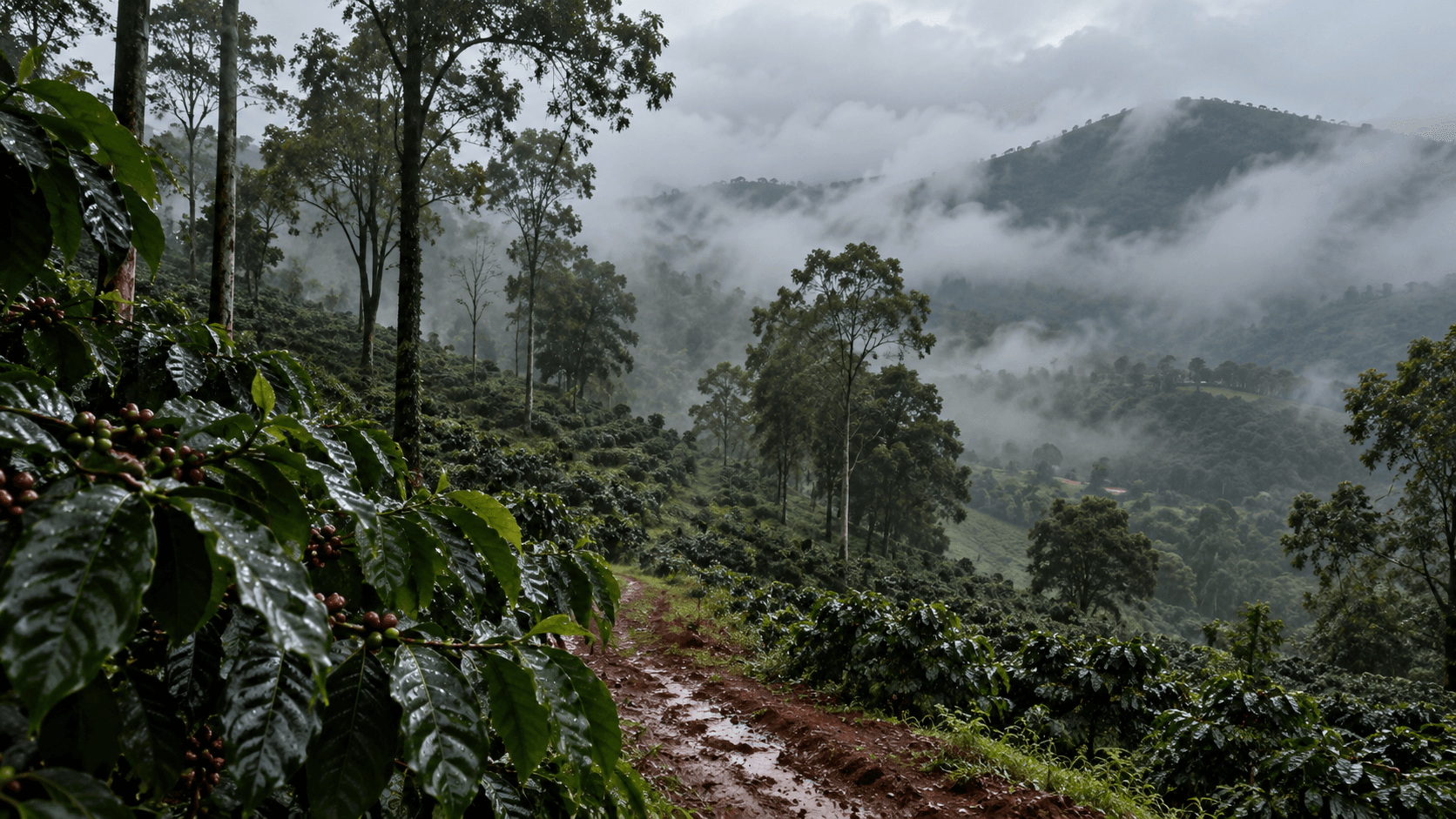
- The whole district is saturated green. Streams appear where there were none.
- Waterfalls like Hebbe and Jhari run at full force.
- Mist sits in the valleys through the day, and the estates feel wrapped in cloud.
- Rooms are cheaper and the roads are quiet.
What to weigh:
- Rain can be heavy and continuous for days.
- Some jeep tracks to waterfalls close when the streams rise, and treks may be paused for safety.
- Leeches come out on forest paths. Salt and a pair of leech socks help.
- Long views disappear behind cloud. If your main goal is a clear sunrise from Mullayanagiri, this is not your season.
Come in the monsoon for atmosphere, greenery and the sound of rain on a tin roof. Do not come expecting a packed sightseeing itinerary.
The Best Time for Specific Trips
For trekking and peak views: November to February, on a clear, dry morning.
For waterfalls at full flow: late June to September, accepting that some may be closed on the wettest days.
For a quiet couples trip: May, or midweek in November and February.
For seeing coffee worked on the estates: the harvest months, roughly November to January.
For the coffee blossom: a gamble on late March or April, right after the first rain.
A Note on Weekends
Whatever month you pick, a Chikmagalur weekend that starts Friday night and ends Sunday evening will be busier than a Tuesday to Thursday stay in the same week. The district absorbs weekday visitors easily. It strains a little on Saturdays. If your dates are flexible, that single choice makes more difference than the month.
Where to Stay Through the Seasons
An estate stay changes character with the year. In winter you want a bonfire and a warm room. In the monsoon you want a covered terrace where you can sit and watch the rain without getting wet. Nature Kingdom, set among coffee plantations near Mallenahalli, works in both: every stay includes an evening bonfire, the terrace looks out over the estate, and there is power backup for the days when monsoon weather knocks out the line. A BBQ can be arranged on request for an added charge. Check in is from 12:00 PM and check out is 11:00 AM.
Pick the season that matches the trip you want, travel midweek if your calendar allows, and give the winding roads more time than the map suggests.
Planning a visit to Chikmagalur?
Stay at Nature Kingdom — surrounded by coffee estates, misty hills, and mountain mornings.
Book a Stay